
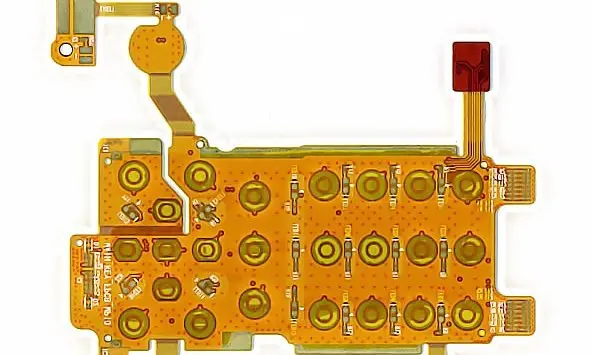
Map each finger’s independent motion
Show how the jaw or finger moves relative to the fixed base and where the circuit can fold or slide. Include the fully open, closed and overtravel conditions defined by the mechanism owner. Use dynamic-flex planning to distinguish repeated jaw motion from assembly folds.
Gripper-specific inputs
| Feature | Define | Review |
|---|---|---|
| Jaw travel | Route through full movement | Pinch and overtravel clearance |
| Fingertip sensor | Location and mechanical coupling | Measurement during motion |
| Replaceable finger | Service interface and procedure | Controlled connector loading |
Protect sensing without restraining the mechanism
For force or tactile sensors, define location and mechanical coupling with the sensor designer. The flex should not introduce an unreviewed restraint that changes the measurement or motion. Review strain relief at the base and fingertip so incidental pulling does not reach the connection.
Identify pinch points, workpiece contact and debris paths. A circuit routed safely with no object present may become exposed when a large or misaligned part is gripped. Document the protected envelope and allowable contact surfaces as part of the mechanical review.
Design for fingertip replacement
Decide whether the flex is replaced with the finger, retained in the base or connected through a serviceable interface. Include the tool access and connector sequence in a trial assembly. Test representative jaw movement and handling with functional sensing checks, then inspect local bends and terminal support. Define what evidence is needed after a fingertip design change.
Before you release the design
- Provide all jaw positions and approved overtravel conditions.
- Mark the protected route with a workpiece present.
- Coordinate sensor support with the measurement designer.
- Specify the replacement and post-service test procedure.
Watch points
- An interconnect can alter a delicate sensing mechanism if its restoring force or attachment path is ignored.
Practical questions
Should the flex be part of the replaceable fingertip?
Compare wear exposure, connector space, replacement cost and installation risk. Define the boundary that gives the product a practical maintenance procedure.
Is an empty-cycle test sufficient?
It may miss workpiece contact, load-related deflection and debris exposure. Use conditions that represent the intended gripping tasks and acceptance criteria.
Technical references
References support the material or design context. Check the exact grade, part number, document revision and project conditions before release.Updated 27 September 2026 · Technical content policy · Engineering guidance supports project review; the agreed drawing defines the build.