
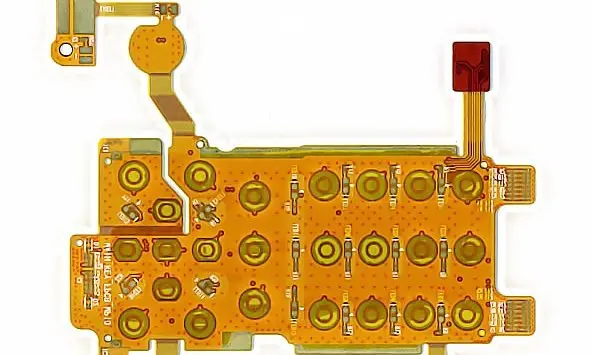
Map textile deformation before attaching electronics
Identify regions that stretch, fold, crease or rub during use. Mark component islands and the distance changes between their attachment points. The wearable-sensor guide helps separate sensing placement from carrier movement. Do not assume a standard flex circuit can follow the extension of an elastic fabric.
Textile integration decisions
| Product condition | Input | Design response |
|---|---|---|
| Stretch and folding | Carrier deformation map | Mechanical decoupling and route |
| Attachment | Process and allowed contact areas | Controlled load transfer |
| Care and service | Removal or cleaning procedure | Defined protection boundary |
Define how the textile transfers load
Specify attachment zones and how threads, adhesive, pockets or mechanical holders interact with the circuit. Review strain relief at cable exits and module connections. Keep unintended punctures, tight folds and concentrated pulling out of the circuit’s allowed route through a controlled assembly method.
Choose whether electronics are permanent or removable before designing the interface. A removable module needs an accessible connection and a clear removal procedure; a permanent assembly requires a defined exposure and care specification from the product owner.
Verify care and use with representative construction
Test with the actual textile, attachment process, component mass and intended movement. Include the specified cleaning or laundering conditions only where the product is designed for them. Evaluate electrical function and physical changes at attachment edges. A loose circuit test cannot establish how the combined textile system behaves after repeated wearing or care.
Before you release the design
- Document fabric extension and circuit motion separately.
- Mark allowed attachment areas and prohibited puncture zones.
- Decide permanent versus removable electronics early.
- Verify with the actual textile and attachment process.
Watch points
- A bendable circuit attached across a stretching region can experience extension that its design never addressed.
Practical questions
Is flexible PCB the same as a stretchable circuit?
No. Define the required deformation and review the architecture explicitly. Standard flex should not be assumed to extend with fabric.
Can the assembled textile be washed?
That requires a product-specific design and verification plan covering all electronics, connections, protection and attachment materials under the intended care conditions.
Technical references
References support the material or design context. Check the exact grade, part number, document revision and project conditions before release.Updated 27 September 2026 · Technical content policy · Engineering guidance supports project review; the agreed drawing defines the build.