
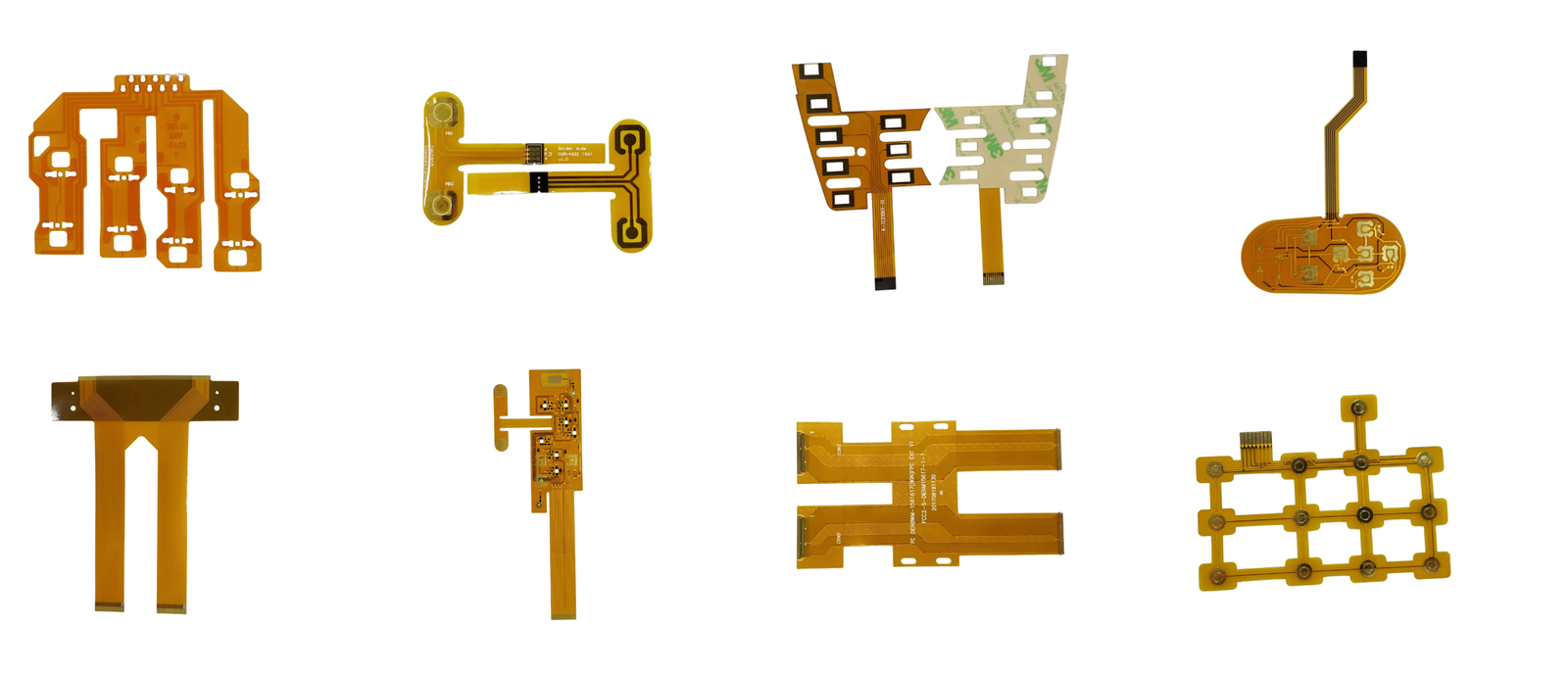
Begin with the product, then choose the construction
Sketch the two ends of the connection and every position between them. Record whether the circuit is formed during installation, disturbed during service, or moved throughout operation. The distinction in static and dynamic duty changes the review and test plan. A thin circuit that fits a drawing still needs a defined mounting arrangement, clearance envelope, and termination method.
Use the sketch to separate electrical routing from mechanical support. A component island may need reinforcement while an adjacent span must remain free to move. Compare stiffened flex and rigid-flex before adding layers simply to make the whole circuit feel more rigid. The objective is support where loads enter and controlled compliance where motion occurs.
Choose the next engineering discussion
| Product need | Construction question | Evidence to request |
|---|---|---|
| Connect fixed modules | Can a supported terminal and flexible span replace separate wiring? | Fit and assembly trial in the actual enclosure |
| Carry components around a shape | Where are stable assembly areas required? | Local support drawing and process trial |
| Move with a mechanism | Which span bends and which loads reach its ends? | Representative motion test with electrical monitoring |
| Route dense signals | Which reference and connector geometry are needed? | Reviewed channel and stackup definition |
Describe the circuit by region
A single layer count does not fully describe a finished flex. Copper, dielectric, coverlay, bonding layers, shielding, and local reinforcement contribute differently across the outline. Build a region map with an unambiguous cross-section for each terminal, moving span, and assembly area. The stackup guides explain how to turn that map into a reviewable construction proposal.
Choose an evidence-producing prototype
Make the first build answer a product question: terminal fit, installed clearance, assembly handling, channel performance, or representative movement. Agree on what will be measured before ordering. Photographs of a folded sample are useful records but do not establish service life. Carry unresolved material, tolerance, and process choices into the quotation brief as named questions rather than hidden assumptions.
Before you release the design
- Mark installation, operating, and service positions on one sketch.
- Identify the exact mating parts and contact orientation at both ends.
- List the environmental and electrical conditions separately from material preferences.
- Assign a measurable purpose to the first prototype build.
Watch points
- Do not use a supplier's material coupon result as the finished product's lifetime.
- A flexible substrate does not automatically make a mounted component or connector flexible.
Practical questions
Is every flexible circuit made from polyimide?
No. Flexible-circuit material systems vary. Choose a complete laminate and insulation system against assembly, environment, electrical, and motion requirements; a film family name alone is incomplete.
Does a flex circuit always reduce product cost?
It may simplify packaging or assembly, but tooling, handling, terminals, and qualification also matter. Compare complete installed assemblies at the intended volumes and service strategy.
Technical references
References support the material or design context. Check the exact grade, part number, document revision and project conditions before release.Updated 27 September 2026 · Technical content policy · Engineering guidance supports project review; the agreed drawing defines the build.