
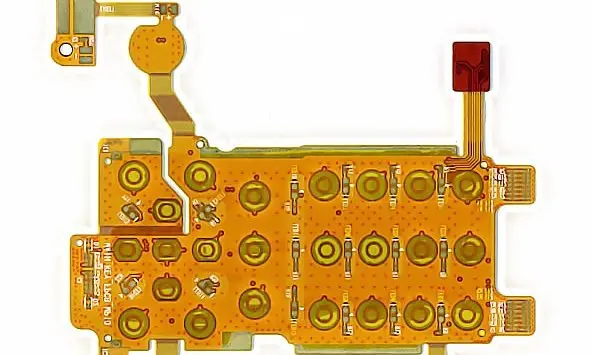
Locate the circuit relative to the band
State whether flex remains inside a rigid pod, follows a curved housing or crosses into the strap. If the band stretches, do not assume the circuit can absorb the same extension. Use strain-relief planning to define attachment points and how motion is diverted away from terminals.
Fitness-tracker decisions
| Product feature | Required definition | Design consequence |
|---|---|---|
| Flexible band | Extension and bend envelope | Need for mechanical decoupling |
| Sensor window | Position and tilt tolerance | Local support and datums |
| Sweat exposure | Protection boundary and test conditions | Interface and sealing review |
Protect interfaces without hiding assembly risks
Identify likely paths for moisture to reach contacts, soldered joints and reinforcement edges. Define the enclosure, sealing or coating responsibility and the associated assembly sequence. The coverlay guide explains the protective layer within the circuit; that layer should not be treated as a complete wearable sealing system.
For optical or contact sensors, dimension the sensing location from enclosure datums. Include fixture or adhesive placement tolerances that can shift the sensor relative to its window. Keep the electrical connection and mechanical location requirements visible in the same review package.
Test use and replacement as separate events
Specify representative body motion, band adjustment and any user-removable modules. Define exposure conditions and functional checks for the complete assembly with the product owner. Inspect the circuit after a realistic replacement sequence, including the possibility of pulling on the wrong part. Qualification should evaluate the installed protection and load paths rather than an isolated flat sample.
Before you release the design
- Mark the boundary between band and electronics.
- Define sensor alignment from functional datums.
- Document exposed interfaces and protection ownership.
- Include adjustment and module-replacement handling.
Watch points
- Conformability around a wrist does not establish stretchability with an elastic band.
Practical questions
Can coverlay make the tracker waterproof?
Do not infer that. The complete enclosure, contacts, joints, openings and sealing process need a defined protection requirement and representative verification.
What if the tracker module is removable?
Include removal forces, grasp locations, connector operations and replacement procedure in the design brief. The circuit should not become the unintended handle.
Technical references
References support the material or design context. Check the exact grade, part number, document revision and project conditions before release.Updated 27 September 2026 · Technical content policy · Engineering guidance supports project review; the agreed drawing defines the build.