
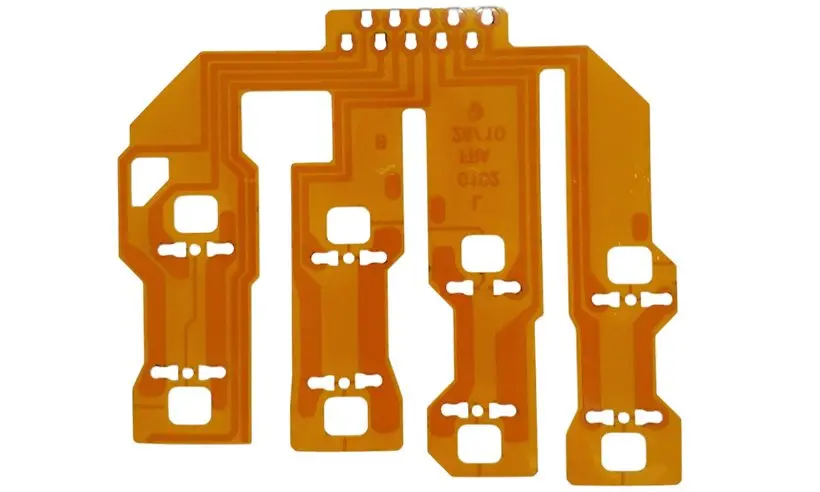
Write a decision for every sample group
Separate fit checks, electrical bring-up, assembly trials and motion evaluation. A simple shape sample can help review access but may not represent a plated and populated circuit. Use the mechanical-model workflow to label what each sample can establish and which assumptions remain open.
Match the prototype to the question
| Question | Representative feature | Useful output |
|---|---|---|
| Will it fit? | Outline, thickness and installed route | Marked interference report |
| Will it assemble? | Pads, finish and support | Assembly observations and joint review |
| Will it move? | Local stack, mounts and motion | Defined test result with conditions |
Keep critical production features representative
List the material, copper, coverlay, finish, terminal stack and reinforcement details that influence the question being tested. If a shortcut changes one of them, document it. Review the bend-test plan before using a prototype to judge a moving application.
Request enough parts for setup losses, measurement and repeat checks, without inventing a universal sample count. For destructive evaluation, identify which samples are sacrificed and preserve their revision and build records. A result without construction traceability is difficult to transfer to the next version.
Close the loop before changing the design
Record the observation, test conditions and decision separately. A failed connector fit might concern local thickness, alignment, adhesive or the wrong drawing revision; changing the whole stack immediately can hide the cause. Release modifications with explicit reasons, then define which checks must repeat before moving to a production transfer.
Before you release the design
- Assign a decision and owner to each prototype test.
- Label deliberate departures from the planned production build.
- Provide fixture and installed-geometry information.
- Keep results tied to the exact circuit revision.
Watch points
- A successful bench connection does not qualify long-term movement, environment or manufacturing repeatability.
Practical questions
Should the first prototype include all components?
Only if they are needed to answer the intended question. A staged program can separate fit and electrical risks, provided later tests use the complete representative assembly.
When is a prototype ready for transfer?
When required decisions are closed, changes are controlled and the agreed verification evidence supports the intended release. Quantity alone does not define readiness.
Technical references
References support the material or design context. Check the exact grade, part number, document revision and project conditions before release.Updated 27 September 2026 · Technical content policy · Engineering guidance supports project review; the agreed drawing defines the build.