
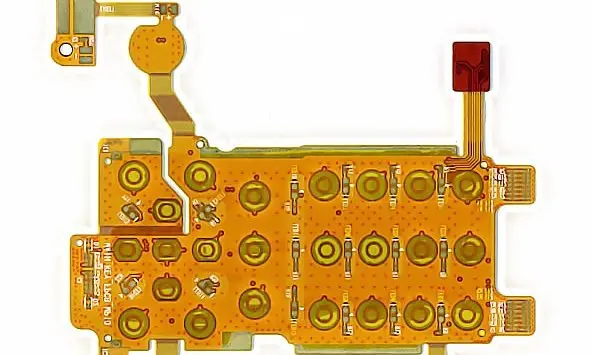
Define the ring’s real assembly envelope
Provide the inner and outer housing geometry, openings and assembly sequence. Distinguish the final curved route from the path the circuit must travel during insertion. Use the mechanical-model workflow to include component heights, local reinforcement and access for tooling.
Smart-ring engineering inputs
| Constraint | Input | Check |
|---|---|---|
| Radial budget | Local stack and component heights | Installed interference |
| Circumference | Island positions and ribbon lengths | Sensor and contact alignment |
| Assembly access | Insertion and joining sequence | Repeatable handling and inspection |
Place supported islands before routing the ribbon
Identify sensors, battery contacts and components that need stable alignment. Dimension each island from the housing feature that locates it, then connect the islands within the available route. The component placement guide helps keep the formed ribbon separate from soldered regions.
Compare a continuous curved assembly with segmented supported regions using the actual thickness budget. Ask where joining or connector operations can occur and whether they remain inspectable. Extra copper or shielding should have a named function because every construction change must be checked against the tight radial envelope.
Qualify the formed state and assembly process
Use representative housing parts to trial insertion, alignment and closure. Check the circuit after forming and again after assembly conditions that can shift or compress it. Define environmental and mechanical acceptance with the product owner. Material flexibility alone does not establish that a small-radius ring construction is manufacturable or reliable in the finished product.
Before you release the design
- Provide installed and insertion envelopes.
- Dimension sensor and contact positions from housing datums.
- Identify supported islands and formed ribbon sections.
- Review inspection access before the ring is closed.
Watch points
- A circuit can match the final circumference yet require an impossible insertion bend during assembly.
Practical questions
Is the thinnest possible stack the best choice?
Only if it also meets electrical, handling and interface requirements. Evaluate the complete local construction and assembly process rather than minimizing one film thickness.
Can ring curvature be approved from a CAD image?
The image supports fit discussion. It must be followed by a construction review and a representative assembly trial with defined acceptance checks.
Technical references
References support the material or design context. Check the exact grade, part number, document revision and project conditions before release.Updated 27 September 2026 · Technical content policy · Engineering guidance supports project review; the agreed drawing defines the build.