
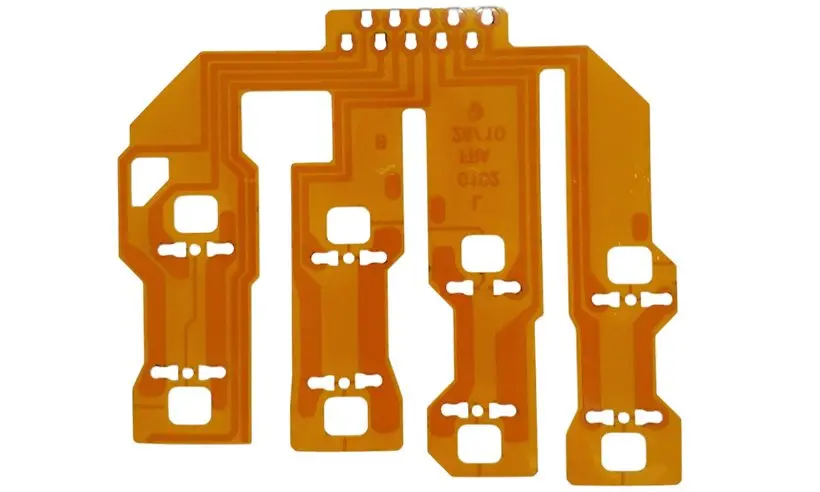
Make the unusual feature explicit
Identify the reason for each branch, slot, neck or folded section. It may route around a fastener, align a sensor, separate moving elements or provide a contact interface. Use outline and slot planning to review mechanical stress and handling rather than treating the profile as decoration.
Communicate nonstandard geometry
| Feature | Functional information | Review output |
|---|---|---|
| Branch or neck | Motion and clearance envelope | Supported routing proposal |
| Slot or opening | Mating feature and datum | Agreed dimensions and tolerances |
| Complex terminal | Contact face and insertion direction | Interface drawing reference |
Use functional datums and installed views
Dimension features from the interfaces that locate the circuit in the product. A long chain of nominal outline dimensions can obscure the relationship between a terminal and mounting hole. The tolerance guide helps prioritize dimensions that determine fit.
Provide both the flat manufacturing outline and the installed envelope. Label branches and contact faces so that rotated views remain clear. Where the circuit can fold in more than one order, record the intended sequence and the space needed by the assembler. Include clearance to enclosure edges and neighboring parts.
Evaluate the manufacturing consequences
An unusual outline can affect material utilization, panel support and removal from the panel. Ask for a proposed panel and handling arrangement when fragile features are present. Review process access for openings, reinforcement and terminals. The final inquiry should distinguish necessary product geometry from preferences that can move after engineering review.
Before you release the design
- Explain the function of every unusual outline feature.
- Supply flat and installed views with consistent labels.
- Identify datum-driven critical dimensions.
- Separate fixed product constraints from negotiable geometry.
Watch points
- Tightening all dimensions equally can add inspection effort without improving the interfaces that actually control fit.
Practical questions
Can an outline be quoted before routing is finished?
A preliminary inquiry can review geometry and scope. Clearly identify missing electrical and stack details, because they may change the proposed process and price.
Should an installed 3D model replace the flat drawing?
No. Use both. The model communicates space and assembly intent; the controlled flat data and drawings define the manufacturable article and its acceptance features.
Technical references
References support the material or design context. Check the exact grade, part number, document revision and project conditions before release.Updated 27 September 2026 · Technical content policy · Engineering guidance supports project review; the agreed drawing defines the build.